
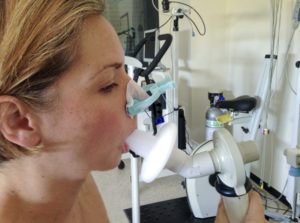
If you are still undiagnosed but visit your doctor with a number of symptoms, s/he is likely to order additional testing specific to those symptoms, even as she is ordering testing to try to determine what is going on. For example, if you come in complaining of shortness of breath, in addition to ANA and other specific testing, she is likely to order a number of tests, including a pulmonary function test (PFT), as well as possibly a Doppler echocardiogram and a CT scan. If you have difficulty swallowing or severe heartburn, s/he may order an upper GI endoscopy and esophageal manometry. These tests are discussed more fully in the Scleroderma FAQ. However, if your initial symptoms are less immediately concerning, for example, only swollen fingers in the mornings, Raynaud’s, and occasional heartburn, then the immediate focus is likely to be restricted to diagnostic testing (and perhaps order for medications that might help the Raynaud’s symptoms and heartburn). However, if the diagnostic test ultimately indicates that you either have or are likely to develop one of the forms of scleroderma, then your physician should order a number of baseline tests to try to determine if you are developing problems that are not yet causing clinical symptoms but are likely to in the future. This will allow you to start treatments earlier than would be the case if you wait until more obvious clinical symptoms start to occur. Since scleroderma progresses at a very variable rate, you may never develop certain symptoms, but it is very prudent to be checking for these symptoms on a regular basis in order to detect them as early as possible.
Here are some baseline tests and assessments that should be ordered when you are diagnosed with either active or potential scleroderma, even if you have no specific symptoms (see the full Scleroderma FAQ for more details). Some of these tests need to be repeated on a regular basis, even if you continue to show no clinical symptoms. Note that if specific acute clinical symptoms (e.g., shortness of breath) develop, your doctor will follow up with appropriate testing related to that particular symptom. However, it is still important that routine testing and assessment be done to detect other potential problems as early as possible.